
Leg Lengthening Surgery: Cost and Risks
It's a real orthopedic procedure, not a shortcut: a bone is surgically cut and pulled apart by about a millimeter a day. Here's what it actually costs, what can go wrong, and what's worth trying before you get anywhere near an operating table.
 Damien, founder of HALOIA11 min read
Leg lengthening surgery is a genuine orthopedic procedure that can add roughly 5 to 15 centimeters of height, at a documented cost of $75,000 to $150,000 per bone segment in the US. The mechanism is simple to describe and hard to live through: the bone is surgically cut, then a fixator very gradually pulls the two pieces apart, about a millimeter a day, while your body grows new bone to fill the widening gap. It also comes with months of intensive rehabilitation and real, documented risks: infection, nerve damage, joint stiffness, and chronic pain. This isn't a wellness trend or a weekend procedure. It's major surgery, and it deserves to be evaluated with the same seriousness as any other major surgery.
How the procedure actually works
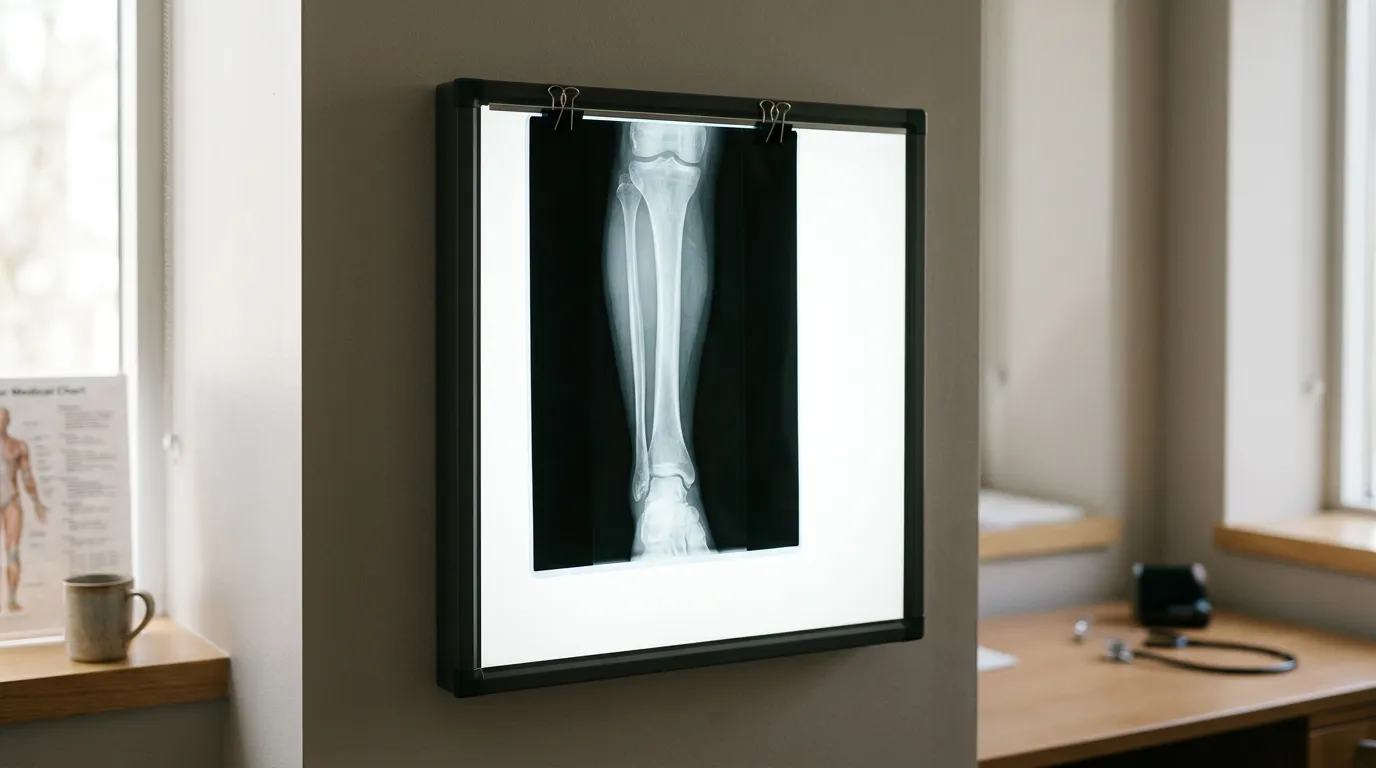
The technique is called distraction osteogenesis, and it wasn't invented for cosmetic height gain. It was originally developed to correct genuine leg-length discrepancies, cases where one leg is meaningfully shorter than the other due to injury, infection, or a congenital condition. A surgeon performs an osteotomy, a controlled cut through the bone, usually the femur or tibia, and attaches a fixator, either an external frame or a device fitted inside the bone. Once the initial healing period starts, the fixator is adjusted to slowly pull the two bone segments apart. The gap doesn't stay empty: the body responds by laying down new bone tissue in the widening space, a process that only works within a very narrow, closely monitored rate of distraction. Today, the same technique is also performed for purely cosmetic reasons, on people with no underlying leg-length problem at all, which is part of why it has become a growing subject of medical and ethical discussion.
The standard distraction rate is about 1 millimeter a day. Do the math on that and the implications become clearer: gaining 5 centimeters of height means roughly two months of active, daily lengthening alone, before the new bone has had any real time to harden into a structure that can safely bear full body weight. Reaching the upper end of the documented 5-15cm range takes proportionally longer. Source: ScienceAlert, "The Boom in Height Surgery."
The fixator itself comes in two broad forms, and the choice matters for day-to-day life during treatment. An external frame is visibly attached to the leg through the skin for the full duration of lengthening, which makes adjustments easy to perform but also means living with a bulky, pin-anchored apparatus in plain sight for months. An internal device sits inside the bone itself, adjusted remotely, and is far less visible day to day, but it's a more involved surgical placement and, like any implanted hardware, has to be considered as a separate object that eventually needs to come out. Neither option removes the fundamental trade-off: both require the surrounding tissue to tolerate a slow, sustained mechanical stretch for weeks on end.
What it actually costs
In the US, cosmetic limb lengthening runs $75,000 to $150,000 per bone segment. That per-segment framing matters more than it might seem: most procedures involve lengthening the femurs, the tibias, or both, which means the number you should be budgeting for is often a multiple of that figure, not the figure itself. A patient targeting a larger height gain across both femurs and both tibias is looking at a very different total bill than someone lengthening a single segment. Because this is elective when pursued purely for height, rather than to correct a diagnosed medical discrepancy, it's generally an out-of-pocket expense on top of lost income during a recovery period measured in months, not weeks. And the headline figure typically covers the primary surgery and hardware, not necessarily every follow-up consultation, imaging appointment, hardware-removal procedure, or the physical therapy sessions that run alongside the entire process, so the realistic all-in cost tends to land above the advertised number, not below it.
The recovery timeline
Recovery breaks down into two phases that follow directly from how the procedure works. During the active distraction phase, the fixator is gradually adjusted, day by day, while the surrounding muscles, nerves, and blood vessels are forced to stretch to accommodate the lengthening bone, which is itself a major driver of the pain and stiffness patients report. Once the target length is reached, the bone enters a consolidation phase, where it has to harden enough to safely bear weight again, before the fixator can eventually come out. Across both phases, the process demands months of intensive rehabilitation: physical therapy to keep joints mobile and prevent the surrounding muscle and connective tissue from stiffening around the lengthening bone, plus a slow, monitored return to full weight-bearing activity. This isn't a procedure you recover from on the couch. It's one that requires sustained, structured medical follow-up for a large chunk of a year, sometimes longer.
It's also worth being realistic about what those months actually look like day to day, not just clinically. Reduced weight-bearing during active lengthening typically means relying on crutches or a walker for extended stretches, adjusting a fixator or managing pin-site care as a daily routine, and, for most patients, taking an extended leave from work or study rather than trying to work through it. That's before accounting for the psychological weight of a treatment measured in months rather than a single procedure with a clear endpoint. None of this is a reason to dismiss the option outright for someone who has genuinely weighed it, but it's the kind of detail that tends to get compressed into a single "recovery time" bullet point in marketing material, when in practice it reshapes most of a year.
The complications that are actually documented
This is where the marketing around cosmetic height surgery tends to go quiet, and where it matters most to be direct. Reporting on patients who've undergone cosmetic limb lengthening documents a consistent set of real risks, not rare edge cases dredged up to scare people off.
- Infection: any procedure involving an external fixator or an internal device creates an ongoing entry point for infection, at the pin sites if the frame is external, or at the surgical site itself, for the entire duration of treatment, not just the initial operation.
- Nerve damage: as bone is pulled apart faster than soft tissue naturally wants to stretch, nerves running alongside it can be compressed or injured, which can produce lasting numbness, pain, or weakness depending on severity and location.
- Joint stiffness: the knees, ankles, and hips have to keep functioning through months of altered mechanics as the limb lengthens, and stiffness that doesn't fully resolve after treatment is a documented and common outcome.
- Chronic pain: some patients report pain that persists well past the consolidation phase and the removal of hardware, meaning the trade-off isn't always confined to the treatment period itself.
None of this means every patient experiences every complication. It means these are established, recurring risks in the real-world population of people who've had this surgery, not hypothetical worst cases, and they should factor into the decision with the same weight as the height number itself. Source: MDLinx, reporting on patients undergoing limb lengthening surgery for cosmetic reasons.
It's also worth noting that risk generally scales with how much is being asked of the body. Lengthening a single bone segment by a modest amount is a different risk profile than lengthening four segments toward the upper end of the documented range, because each additional segment and each additional centimeter adds more tissue that has to tolerate sustained stretching, more time with hardware in place, and more opportunities for infection or nerve involvement to occur. A serious conversation about this procedure has to weigh the specific plan being proposed, not the vaguest, most optimistic version of the outcome.
Your Appearance Score
What's Your Appearance Score?
60 seconds. Get a score based on your habits.
Who actually gets this surgery, and why
Distraction osteogenesis started as reconstructive medicine, correcting real, diagnosed leg-length discrepancies where one limb is functionally shorter than the other. What's shifted in recent years is the growth of an entirely separate patient population: adults with no underlying medical discrepancy who are choosing the procedure purely to gain height, a shift significant enough that it's been described in medical reporting as an actual boom in cosmetic height surgery. Part of what drives that demand is straightforward: by the time someone is old enough to make a considered, adult decision about elective surgery, their skeleton has typically been done growing for years. Growth plates gradually convert from cartilage into solid bone from late adolescence into the early twenties, with complete closure typically landing around 18 to 19, sometimes as late as 21. Once that's finished, surgery is not one option among several for gaining real height. It's the only one that changes actual bone length, because every non-surgical route that might have worked closed the same door the growth plates did.
Twin studies estimate that genetics accounts for roughly 80% of the variation in adult height within a population, with the remaining share tied to childhood and adolescent factors like nutrition and health. By adulthood, both the genetic ceiling and the environmental window that could have influenced it are already fixed outcomes, not open variables, which is part of why surgery exists as a category at all: it's the one method that operates on bone length after biology has otherwise closed the account. Source: twin heritability studies on height, synthesized by Scientific American.
What to try before you get anywhere near an operating table
If your growth plates are still open, meaning you're a teenager still going through puberty, the honest picture is more hopeful and much cheaper than surgery. Combined with adequate protein, calcium, and vitamin D, quality sleep helps a teenager reach the height their genetics already set as a ceiling. It's worth being precise about what that means, though: none of this pushes anyone past that genetic ceiling. It just helps them reach it instead of falling short of it through poor sleep or poor nutrition during the window when it still matters.
About 70% of daily growth hormone secretion during adolescence happens during sleep, particularly deep sleep, which means chronic sleep deprivation at this stage can measurably slow growth velocity. It's one of the only genuinely evidence-backed levers a still-growing teenager has, and it's free. Source: synthesis of pediatric endocrinology literature.
Once growth plates have fused, the equation changes completely, and this is where a lot of products and routines quietly sell false hope.
- "Grow taller" supplements for adults have no serious scientific basis. Once growth plates have fused, no vitamin, mineral, or herbal ingredient can restart bone lengthening, regardless of what the label claims.
- Inversion tables, spinal stretching devices, and hanging exercises don't make you taller either. They temporarily decompress the intervertebral discs, producing an apparent gain of a few millimeters up to about 2 centimeters, but the effect is purely reversible and fades within hours.
- Growth hormone treatment can't lengthen fused bones. It's reserved for confirmed hormone deficiencies, where it may improve bone density or muscle mass, but once bone growth has ended, it has no mechanism left to make bones longer.
There's also a simpler, free lever that most people underuse: posture. A hunched back, rounded shoulders, or a forward-leaning head can make someone appear up to 2 to 3 centimeters shorter than their actual bone height, purely from spinal compression, with zero change to the skeleton underneath. Standing straight recovers that appearance instantly. It's also worth knowing that measured height naturally fluctuates by about 1 to 2 centimeters between morning and evening, from ordinary daytime disc compression that resets overnight, so a single measurement at the wrong time of day can make you second-guess a number that was never actually stable to begin with.
And if the actual goal is simply appearing taller in day-to-day life rather than changing a permanent number, footwear does that instantly, with none of the cost or medical risk described above: shoe inserts, structured soles, or slightly built-up heels routinely add a couple of centimeters of apparent height with zero recovery time. It's not glamorous advice, but it's the only item on this list that works the same day you try it, at essentially no risk, which is worth sitting with before comparing it to a procedure that costs six figures and asks for months of your life.
Whether or not you ever seriously consider a procedure like this, it's worth separating two different problems that tend to get tangled together: how tall you actually are, and how good you feel about how you look. The first is, for the vast majority of adults, a closed question, set by genetics and adolescence long before this decision ever comes up. The second responds to things that are genuinely in your control day to day: posture, muscle tone, skin, energy, how your clothes actually fit you. That's closer to what HALOIA is built around, tracking the levers you can actually influence and turning them into visible, trackable progress, instead of fixating on the one number that only a $75,000 surgery can change.
This article is for information only and is not a substitute for medical advice. For any question about your health, a treatment or a supplement, consult a qualified professional.
Improve your appearance by eating better
Build real confidence by tracking your diet. Download HALOIA and start your tracking.

Go further

The 4 Real Causes of Facial Water Retention
Puffy face again? There are only four real culprits, and they leave different clues. Here's how to tell them apart instead of guessing.

Text Neck: The Real Risk of Your Phone
Your head weighs about 5kg. Tilt it forward to check your phone and your neck can end up carrying nearly 27kg instead — the weight of an 8-year-old, hanging off your cervical spine for hours a day.

Interdental Brushes or Floss: Which to Choose?
You've probably been told floss is non-negotiable. The largest review of the evidence says the little brush next to it in the drugstore aisle actually cleans better for most people — here's when each one wins.