
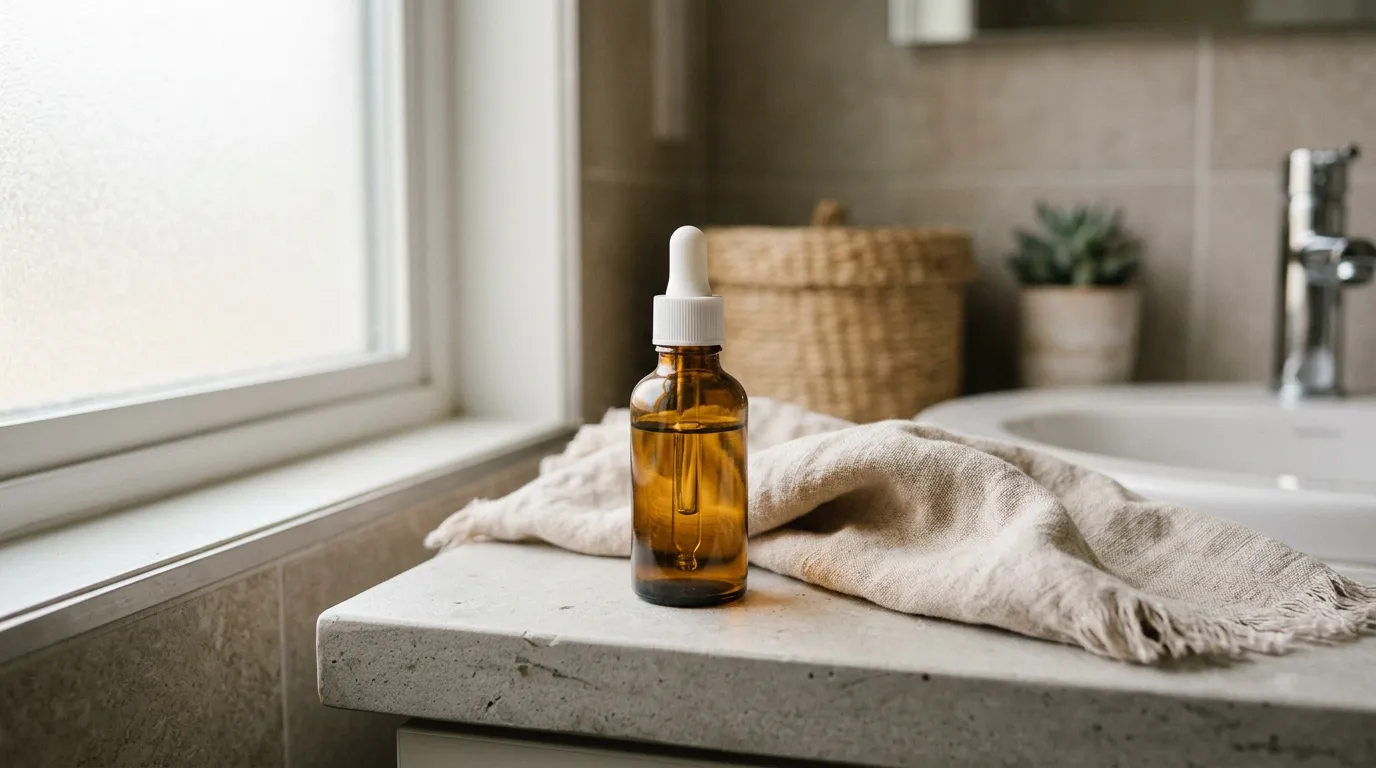
How to Safely Remove Earwax at Home
Forget cotton swabs and candles. Here's the actual protocol doctors recommend for clearing a wax blockage at home, step by step, and how to tell when you need a professional instead.
 Damien, founder of HALOIA11 min read
If you can feel a blockage in your ear right now, here's the short version: the method actually recommended by the NHS is 2 to 3 drops of olive or almond oil in the affected ear, lying on your side for 5 to 10 minutes so the oil can sit against the wax, 3 to 4 times a day, for 3 to 5 days. No cotton swab, no bobby pin, no candle. Softened wax then typically clears on its own, falling out or dissolving completely within one to two weeks. That's the whole method, and it works precisely because it stops fighting how the ear canal is built and instead helps it do what it already does on its own. Most people never try it, because it sounds too slow and too unglamorous next to a cotton swab you can be done with in ten seconds, but that ten-second habit is a well-documented way to make the problem worse, not better. Here's how to tell you actually have a blockage worth treating, the protocol step by step, how long to actually give it, how to know it's working, what happens after it clears, and when this stops being a DIY situation entirely.
How to Tell You Actually Have a Wax Blockage
A genuine wax blockage has a fairly specific signature, and it's worth checking against before you start treating something that isn't actually there. The most common signs are a plugged or full feeling in one ear, muffled hearing that's noticeably worse on one side than the other, a mild ringing or buzzing (tinnitus), occasional itchiness deep in the canal, and sometimes a slight, brief sense of imbalance when you tilt your head. What a blockage usually isn't is sharp pain, fever, or discharge that looks like pus, that combination points toward an infection or something else entirely, and it's a reason to call a doctor rather than reach for oil drops.
It's also worth being honest about how often people treat wax that was never actually a problem. An itchy ear canal on its own, without any of the fullness or hearing change above, is frequently just dry skin or irritation, not a blockage.
A quick, low-effort way to sanity-check yourself before starting anything: cup your hand loosely over the affected ear for a moment, or gently press and release the little flap of cartilage at the front of the ear canal (the tragus). If sound noticeably muffles or clears with that kind of pressure change, or if switching which ear you're using on a phone call makes an obvious difference, that points toward an actual physical blockage rather than general ear fatigue or a one-off itch. It's not a diagnostic test, just a reasonable filter before you commit to several days of drops.
Earwax should only be removed if it's actually causing symptoms — discomfort, hearing loss, pain — or blocking a necessary medical exam. There's no medical reason to clear it out "just in case" in someone with no symptoms at all (AAO-HNS, Clinical Practice Guideline: Cerumen Impaction, 2017).
Why Wax Builds Up in the First Place
Worth saying plainly, since it changes how you should think about the whole problem: earwax isn't dirt, and your ear isn't failing at hygiene by producing it. It protects the canal from dust, bacteria, and water, and it has natural antibacterial properties on top of that. Ears are built to be self-cleaning, with wax naturally migrating outward over time through jaw movement from talking and chewing, carrying trapped debris with it as it goes. Left alone, most ears never build up enough wax to cause a problem at all.
Earwax isn't dirt: it protects the ear canal from dust, bacteria, and water, and has natural antibacterial properties. Ears are designed to be self-cleaning, with wax naturally migrating outward over time (NHS, Earwax build-up).
The most common reason that self-cleaning process fails isn't bad luck, it's interference. Pushing anything into the canal, whether that's a cotton swab, an earbud, or a finger, tends to pack wax down against the eardrum instead of letting it migrate out, which is the opposite of what you were trying to do. That specific habit deserves its own deep dive, and it gets one elsewhere on this site, so the short version here is enough: the single biggest thing you can do to prevent a blockage is to stop interfering with the process that already works.
The Olive Oil Protocol, Step by Step
This is the part worth actually following precisely, because the protocol's simplicity is exactly what makes it effective, and cutting corners on frequency or duration is the most common reason it doesn't fully work. Olive oil and almond oil perform the same job here: they soften and loosen the wax so it can move on its own, rather than trying to physically remove or flush it out by force.
- Warm the oil slightly first, room temperature or gently hand-warmed, never heated on a stove or in a microwave. Cold oil dripped into an ear can trigger a brief, unpleasant dizzy spell as it hits the eardrum.
- Lie on your side with the affected ear facing up, on a towel in case of drips.
- Use a dropper to place 2 to 3 drops into the ear canal, not deeper than that, you're not trying to reach the eardrum.
- Stay lying on your side for 5 to 10 minutes so the oil has time to sit against the wax instead of running straight back out.
- Sit up and let any excess drain onto a tissue rather than wiping or digging inside the canal afterward.
- Repeat 3 to 4 times a day, in both ears if both are affected, for 3 to 5 days in a row, not just once or twice when you remember.
- Don't insert anything else, cotton, a fingertip, an earbud, in between applications. Interfering with the process mid-treatment is how a straightforward protocol turns into a longer one.
To soften earwax at home, the recommended method is 2 to 3 drops of olive or almond oil, lying on your side for 5 to 10 minutes, 3 to 4 times a day for 3 to 5 days. The wax then falls out or dissolves on its own within one to two weeks (NHS, Earwax build-up).
There's no meaningful difference between olive and almond oil for this, so use whichever you have on hand, both work by the same mechanism. What matters far more than the choice of oil is consistency: this is a protocol that fails from being done twice and abandoned, not from picking the "wrong" oil out of the two options that actually work.
How Long It Actually Takes
The full timeline has two phases, and confusing them is the most common reason people give up early. The active part, the drops themselves, runs 3 to 5 days. After that, the softened wax doesn't necessarily fall out immediately, it typically clears on its own, either falling out or dissolving completely, within one to two weeks total from when you started. That means a week or so of nothing dramatic happening after you stop the drops is entirely normal, not a sign the method failed.
After the softening protocol, wax typically falls out or dissolves on its own within one to two weeks of starting treatment (NHS, Earwax build-up).
The most common mistake in this window is impatience: stopping after two days because nothing changed yet, or worse, reaching for a cotton swab or a finger on day three to "help it along." Both undo the progress the oil has already made. If you're going to try this method at all, the honest commitment is the full 3 to 5 days of drops followed by roughly a week of doing nothing else, before you judge whether it worked.
Your Appearance Score
What's Your Appearance Score?
60 seconds. Get a score based on your habits.
How You'll Know It's Working
A few signs tell you the protocol is doing its job. Hearing on the affected side gradually feels less muffled rather than snapping back all at once. The plugged, full sensation eases day by day instead of vanishing overnight. Some people notice a small piece of softened wax on a pillow or in the shower a few days after finishing the drops, that's a genuinely good sign, not something to worry about.
It's also worth knowing that things can briefly feel a little worse in the middle of the process before they get better. As wax softens and shifts position, fullness or muffled hearing can seem slightly more noticeable for a day, simply because the loosened wax is moving rather than sitting still. That's a normal, expected part of the process, not a reason to stop or to intervene with anything sharper than a dropper.
What to Expect After the Wax Clears
Once hearing feels back to normal and the plugged sensation is gone, there's genuinely nothing left to do, no follow-up rinse, no maintenance drops, no ongoing routine. The ear canal goes back to managing itself the same way it did before the blockage built up. If you use earbuds, over-ear headphones, or hearing aids, it's fine to resume normal use as soon as the fullness has cleared, there's no need to wait an extra few days out of caution.
One thing worth watching for the following month or two is whether the same ear starts to feel full again. For most people, a single blockage is a one-off event tied to a specific stretch of using earbuds heavily, swimming a lot, or simply not having had a buildup cleared in a long time, and it doesn't recur on a predictable schedule. But some people do produce more wax than average, or have a naturally narrower or curvier canal that traps it more easily, and for that group, a repeat blockage every several months isn't unusual. If that's your pattern, the same oil protocol works again exactly the same way, and there's no harm in using it periodically rather than waiting for a full blockage to build up, as long as you're only doing it when symptoms actually show up, not on a fixed calendar "just in case."
When to See a Doctor Instead of Trying This Yourself
This method has real limits, and knowing where they are matters more than the protocol itself. Skip the oil drops entirely, and see a doctor instead, if you have ear pain, any discharge (especially anything bloody or pus-like), a known or suspected perforated eardrum, a history of ear surgery, sudden hearing loss, or genuine vertigo rather than a mild, brief dizzy spell. None of those are situations where home treatment is the right first move.
Never use ear drops or oil if you have a perforated eardrum (pain, discharge, or a known history): see a doctor rather than attempting a home remedy (NHS, Earwax build-up).
It's also worth seeing a professional if you've done the full protocol correctly and nothing has changed after that week-long window. Some wax is packed too firmly, or sits too close to the eardrum, for oil softening alone to finish the job, and that's not a personal failure, it's just a case that needs irrigation or microsuction from a clinician instead of another round of drops. This applies especially to anyone who wears hearing aids, where a clear canal isn't optional and repeated DIY attempts that don't fully work are worth escalating quickly rather than repeating indefinitely.
It's worth knowing what that follow-up visit actually looks like, mostly because it's a lot less involved than people expect. Microsuction uses a gentle vacuum under direct visualization to lift softened wax out in a few minutes, with nothing inserted deeper than the outer part of the canal. Irrigation flushes the canal with warm water at a controlled pressure. Both are quick, done in an office visit, and considerably more precise than anything achievable with a bulb syringe and a bathroom mirror. Doing the oil-softening step yourself beforehand, even if you end up needing the follow-up appointment anyway, generally makes that visit faster and more comfortable, since the wax is already loosened by the time a professional gets to it.
Mistakes That Undo the Protocol
Most failed attempts at clearing wax at home come down to a small handful of repeatable mistakes, not bad luck or unusually stubborn wax.
- Ear candling: there's no evidence it removes earwax at all, and it carries a real risk of burns to the ear or face from the candle's melted wax.
- Reaching for a cotton swab, bobby pin, or fingertip mid-protocol to "check" or speed things up, which packs softened wax deeper instead of letting it migrate out.
- Using a bulb syringe to flush the ear aggressively without having softened the wax first, or without knowing how to do it safely, which can push wax further in or irritate the canal.
- Stopping after one or two applications because nothing happened yet, then concluding the method "doesn't work."
- Skipping the lying-down step and just tipping drops in standing up, which means the oil never sits against the wax long enough to actually soften it.
- Continuing to treat with drops for weeks on end when the first full course didn't work, instead of seeing a clinician once you've genuinely given it a fair try.
There is no evidence that ear candling removes earwax, and the practice carries a real risk of burns to the ear or face from the candle's melted wax, despite repeated warnings from health authorities (NHS, Earwax build-up).
None of these mistakes are exotic, they're the default instinct most people reach for the moment a slow, patient method doesn't produce an instant result. The protocol works specifically because it's unhurried: it relies on repeated, gentle exposure over days, not one aggressive intervention. Fighting that with force or speed, digging, flushing hard, or reaching for heat, is what turns a five-day fix into a much longer, more irritated ordeal, and in the case of candling or aggressive syringing, adds a real injury risk that the original blockage never had.
This is a pattern that shows up well beyond ear care: the evidence-backed fix is almost always slower and less dramatic than the workaround everyone's tempted to reach for instead, whether that's a candle, a swab, or skipping a step because waiting feels inefficient. HALOIA is built around that same instinct applied to diet and appearance, tracking what your meals, sleep, and habits are actually doing to your skin and energy week to week, instead of guessing based on whichever quick fix is loudest that week.
If you want a broader, evidence-based read on your skin, diet, and habits before you change anything else, HALOIA's free appearance quiz is a good place to start.
This article is for information only and is not a substitute for medical advice. For any question about your health, a treatment or a supplement, consult a qualified professional.
Improve your appearance by eating better
Build real confidence by tracking your diet. Download HALOIA and start your tracking.

Go further
The 4 Real Causes of Facial Water Retention
Puffy face again? There are only four real culprits, and they leave different clues. Here's how to tell them apart instead of guessing.

Text Neck: The Real Risk of Your Phone
Your head weighs about 5kg. Tilt it forward to check your phone and your neck can end up carrying nearly 27kg instead — the weight of an 8-year-old, hanging off your cervical spine for hours a day.
Leg Lengthening Surgery: Cost and Risks
It's a real orthopedic procedure, not a shortcut: a bone is surgically cut and pulled apart by about a millimeter a day. Here's what it actually costs, what can go wrong, and what's worth trying before you get anywhere near an operating table.