
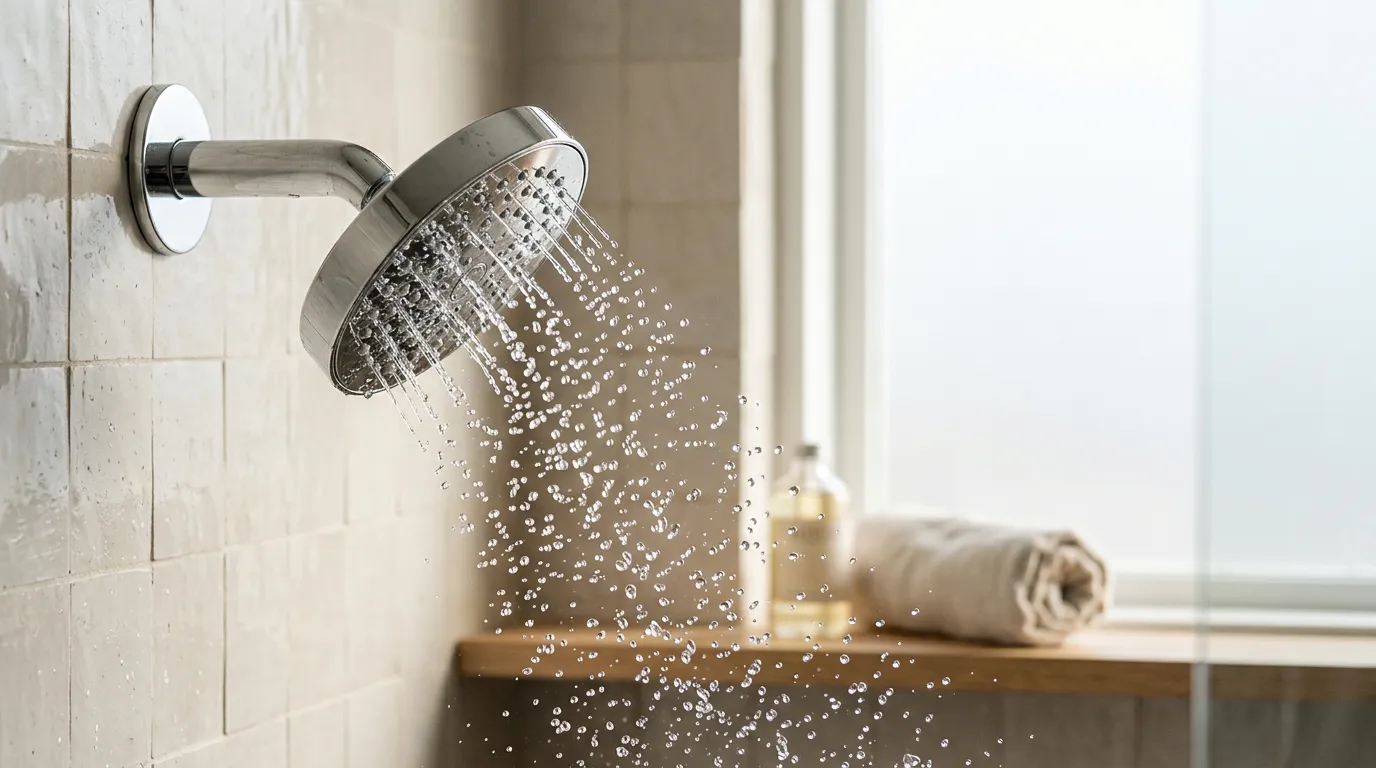
Cold Showers: The Real Effect on Stress
Everyone's doing cold showers for the mental health benefits, but the science is pickier than the trend suggests: the calming effect is real, it just isn't the one you get from a single icy blast.
 Damien, founder of HALOIA11 min read
Cold showers won't erase your stress in one cold blast, no matter how good that first gasp of icy water feels afterward. What the research actually shows is more specific, and more useful: regular cold exposure triggers a surge of norepinephrine that reshapes how your nervous system reacts to stress over time, with the calming, mood-lifting effect showing up clearly after weeks of consistent practice, not immediately after a single session. That distinction changes how you should actually use cold showers if the goal is stress relief rather than just a bracing morning ritual.
The Neurochemical Chain Reaction Behind the Cold
The moment cold water hits your skin, your body reads it as a genuine physical stressor and responds the way it would to any acute threat: heart rate spikes, breathing turns sharp and shallow, and your sympathetic nervous system, the "fight or flight" system, fires hard. Central to that response is norepinephrine, a neurotransmitter and stress hormone released in large amounts by cold exposure, alongside a parallel rise in cortisol. In the moment, that's uncomfortable by design; it's your body's alarm system doing exactly what it evolved to do. But norepinephrine isn't purely a stress chemical. It's also deeply involved in mood regulation, alertness, and focus, which is part of why cold exposure has such an outsized reputation as a mental-clarity tool despite being, physiologically, a genuine stressor you're voluntarily inflicting on yourself.
Regular cold exposure triggers norepinephrine release and, over time, is linked to improved mood and reduced perceived stress and anxiety — the effect is clearer long-term than right after a single session, according to a 2025 systematic review of cold-water exposure and mental health outcomes.
The mechanism worth understanding is that repeated cold exposure appears to train your stress response rather than simply triggering it once. Each cold shower is a small, controlled dose of the same physiological cascade a real stressor produces: spiked norepinephrine and cortisol, an accelerated heart rate, a jolt of adrenaline. Do that on purpose, in a safe and predictable context, often enough, and the working theory is that your nervous system gets practice recovering from acute stress quickly, a skill that appears to transfer to how you handle stress you didn't choose, like a tense meeting or a bad night of news. This is sometimes called hormesis: a controlled, mild stressor that makes a system more resilient overall rather than damaging it, the same logic that explains why exercise, itself a stressor, ultimately lowers baseline stress reactivity instead of raising it.
There's a practical corollary to that reaction worth naming directly: the sharp inhale you feel in the first few seconds of cold water, sometimes called the cold shock response, is a reflex, not a sign that anything is wrong. It typically eases within 30 to 60 seconds as your breathing settles back down. Learning to breathe through it instead of panicking against it is arguably the actual skill being trained here — not tolerance to cold itself, but tolerance to an uncomfortable physiological state without your mind escalating it into a bigger threat than it actually is. That's a rehearsal you can't easily get anywhere else on demand, which is part of the case for cold exposure specifically rather than just "doing something stressful on purpose."
Why the Calm Doesn't Show Up After One Shower
If you've tried a single cold shower expecting to step out zen and instead just felt cold and mildly proud of yourself, that tracks with the actual data. The immediate, in-the-moment experience of cold exposure is arousal, not calm — your body is flooded with stress hormones while it's happening, which is the opposite of relaxing in the short term. The stress-reduction effect that shows up in the research is a longer-term, cumulative one, building across weeks of regular practice rather than arriving in the 90 seconds right after you turn the water off.
That pattern lines up with how most of the underlying research is designed. Studies measuring mood and perceived stress from cold exposure follow participants through a routine over multiple weeks; they aren't researchers checking in right after a single dunk. That's the same structure you see with most other habit-based mental health interventions — exercise for mood, meditation for anxiety — where the single-session effect and the practiced, weeks-in effect are genuinely different questions, and only one of them is what most people are actually chasing when they start a cold shower routine for their mental health rather than for a one-time jolt of adrenaline.
A 2025 systematic review and meta-analysis on cold-water immersion and wellbeing reported improved sleep quality and quality of life with regular cold exposure, but found no clearly demonstrated effect on mood immediately after a single session — evidence that the benefit builds with repetition rather than arriving in one shower.
That's actually good news if you're building a habit: it means you don't need to chase a colder, longer, more extreme version of the shock to get results. What the research supports is consistency, showing up for the mildly uncomfortable version regularly, over intensity, which is the opposite of how most people approach it once they get competitive about how cold or how long they can stand it. A month of 30-second cold showers most mornings is doing more for your stress baseline than one heroic five-minute plunge you never repeat.
Cold Shower vs. Ice Bath: Does the Temperature Difference Matter for Stress
Cold showers and full ice baths sit on the same physiological spectrum, but they're not interchangeable, and most of the research gets grouped under the umbrella term "cold-water immersion," which covers everything from a 60-second cool shower to a 10-minute plunge in near-freezing water. In practice, that matters less for stress specifically than you'd expect: the norepinephrine and cortisol response is triggered by cold water contact and your body's temperature-regulation stress reaction, not by one specific temperature threshold or immersion depth. A cold shower at home reaches your whole body faster and more evenly than most people assume, and it's dramatically easier to do consistently than driving to a facility with a plunge pool or refilling a tub with ice every morning, and consistency, per the section above, is the variable that actually drives the stress benefit.
In a controlled trial, regular cold showering was linked to about 29% fewer sick-leave days among practitioners, alongside measurable changes in immune markers (higher immunoglobulins and certain interleukins) — a reminder that the physiological effects of cold exposure are real and measurable, not just a subjective sense of toughness, even though that specific result is about immune function rather than stress itself (Buijze et al., The Effect of Cold Showering on Health and Work).
Ice baths and cold plunges add intensity and a more structured recovery protocol, part of why they're popular in athletic recovery circles, but nothing in the current research suggests you need that level of extremity for the stress and mood benefit specifically. The instinctive "cold shock" gasp-reflex you feel in the first few seconds is the same in a shower as it is in a plunge pool; what changes with a full-body immersion is mostly the duration and difficulty, not a different mechanism. Unless you're training cold tolerance for its own sake or following a specific athletic recovery protocol, a cold shower gets you into the same physiological territory with a much lower barrier to actually doing it every day.
Cold exposure's mainstream popularity took off largely through cold-plunge culture and specific breathing-and-exposure methods that built a devoted following online, which is part of why the conversation defaults to ice baths and dramatic plunges rather than a plain cold shower. That popularity is mostly a culture and marketing story, not a scientific one. The controlled research measuring mood, stress, and immune outcomes overwhelmingly uses cold showers or standard cold-water immersion protocols in a lab or home setting, not the more theatrical versions that dominate social media — worth knowing if you've been putting off starting because you assumed you needed a stock tank of ice in your bathroom.
Your Appearance Score
What's Your Appearance Score?
60 seconds. Get a score based on your habits.
A Protocol That Doesn't Make You Quit After Day Two
The version of this that people actually stick with almost never starts with a full cold shower from the first second. A more realistic on-ramp: finish your normal warm shower with a short burst of the coldest water your shower produces, and build from there. Don't try to white-knuckle a full cold shower on day one — that's the fastest way to associate the habit with dread and quit within a week, which defeats the entire premise, since the benefit depends on repetition.
- Weeks 1-2: end your regular shower with 20-30 seconds of cold water, breathing slow and steady through the initial gasp reflex instead of fighting it.
- Weeks 3-4: extend to 60-90 seconds, and start the cold portion a little earlier in the shower rather than only tacking it on at the very end.
- After that: build toward 2-3 minutes if you want to, but there's no evidence that going colder or longer past that point adds a meaningfully bigger stress benefit — mostly it just adds difficulty.
- Do it most days, not once a week: the research behind the mood and stress effect is about regular, repeated exposure, and an occasional cold shower isn't the same intervention as a consistent one.
Breathing technique matters more than most people expect in the first couple of weeks. Exhale slowly and deliberately as the cold water hits, instead of sucking in the sharp breath that's the instinctive reaction and the exact thing that makes the first few seconds feel unbearable. A handful of slow, controlled exhales through the initial shock does more to make this habit sustainable than any amount of gritting your teeth or mental-toughness self-talk.
Morning is the more common timing, partly because the norepinephrine spike doubles as an alertness boost that pairs naturally with waking up, and partly because a cold blast right before bed can be counterproductive for people who are sensitive to it, given how activating it is. But the timing itself hasn't been shown to change the stress-reduction effect specifically. The single biggest lever isn't temperature or time of day, it's whether you're still doing it a month from now, which is exactly why starting milder than feels impressive is the better strategy, not a weaker one.
Who Should Be Careful With Sudden Cold Exposure
Cold exposure is a real cardiovascular stressor, not just a mental one, and that matters for a specific group of people. The initial shock of cold water triggers a sharp spike in heart rate and blood pressure, which is generally fine for a healthy cardiovascular system but a genuine risk if you have an existing heart condition.
Sudden cold exposure (an ice-cold shower or cold plunge) carries a real risk for people with cardiovascular conditions such as arrhythmia or hypertension — this group should avoid it without medical advice, according to a 2025 systematic review on cold-water immersion and health.
If that applies to you, or you're unsure, that's a conversation for a doctor before you start, not a detail to skip past because the rest of the internet makes cold showers sound universally safe for everyone. For most healthy adults, the gradual on-ramp above keeps the shock well within a manageable range, which is one more reason not to jump straight to the coldest, longest version on day one, quite apart from whether you'll actually keep doing it.
A few practical cautions apply regardless of cardiovascular history. A cold, wet shower floor is more slippery than a normal one, so stable footing matters if you're going to stand under running cold water for a minute or more. It's not the moment to combine with alcohol, which blunts your ability to notice and respond to genuine distress. And if you're pregnant or managing a chronic illness, a quick check with your doctor before turning it into a daily habit is a reasonable step, the same way you'd check before starting any new physically demanding routine.
What a Cold Shower Won't Fix
None of this makes cold showers a replacement for actually managing chronic stress. A daily cold shower can measurably shift your baseline stress reactivity over weeks, but it's not going to counteract five hours of sleep a night, a genuinely unsustainable workload, or a stressor you're avoiding dealing with directly. Think of it the way you'd think of any single good habit inside a bigger system: real, additive, worth doing, and not a substitute for sleep, boundaries, movement, or professional support if your stress is at a level a cold tap can't touch. The research is about perceived stress and mood shifting at the margins over weeks of practice, not a cure for a stress load that's genuinely beyond what any single daily habit can absorb on its own.
It's also worth being precise about what "reduced stress" means in the studies behind this. It's typically measured through validated but subjective questionnaires capturing how stressed or anxious someone feels day to day, not a clinical treatment outcome for a diagnosed anxiety disorder or depression. If you're managing a diagnosed condition, a cold shower routine is, at best, a complementary habit to run alongside actual treatment and a doctor's guidance, not a stand-in for either.
Stress doesn't stay contained to how you feel, either — it shows up in sleep, in skin, in appetite, in whether you actually stick to the habits you set out to build, which is exactly the kind of pattern that's hard to see day to day and much easier to see over weeks. HALOIA logs your daily habits, sleep, and how your skin and body are actually responding alongside them, so if a cold shower habit, or anything else you add, is actually moving the needle on your stress and how you look and feel, you can see it in the data instead of guessing from vibes alone.
This article is for information only and is not a substitute for medical advice. For any question about your health, a treatment or a supplement, consult a qualified professional.
Improve your appearance by eating better
Build real confidence by tracking your diet. Download HALOIA and start your tracking.

Go further

Should You Hire a Photographer for LinkedIn?
A close-up selfie and a professional headshot don't just look different, they make people think different things about you. Here's what the research actually shows, and how to get most of the effect without booking a studio.
Does Building a Non-Smoker Identity Help You Quit?
Willpower treats every cigarette as its own fight to win. Identity skips the fight entirely. Here's what a year-long study of 623 smokers found, and how the same lever works on food and exercise too.
Reframing Thoughts: The Measured Effect on Mood
Reframing a thought isn't a mood trick, it's a measurable shift in brain activity. Here's what the neuroscience actually shows, the real technique, and where it stops working.