
Zinc for Acne: At What Dose?
Zinc shows up in nearly every 'what to take for acne' list, but almost none of them mention a dose. Here's what's actually been studied, where the safety ceiling is, and how to know if you even need it.
 Damien, founder of HALOIA11 min read
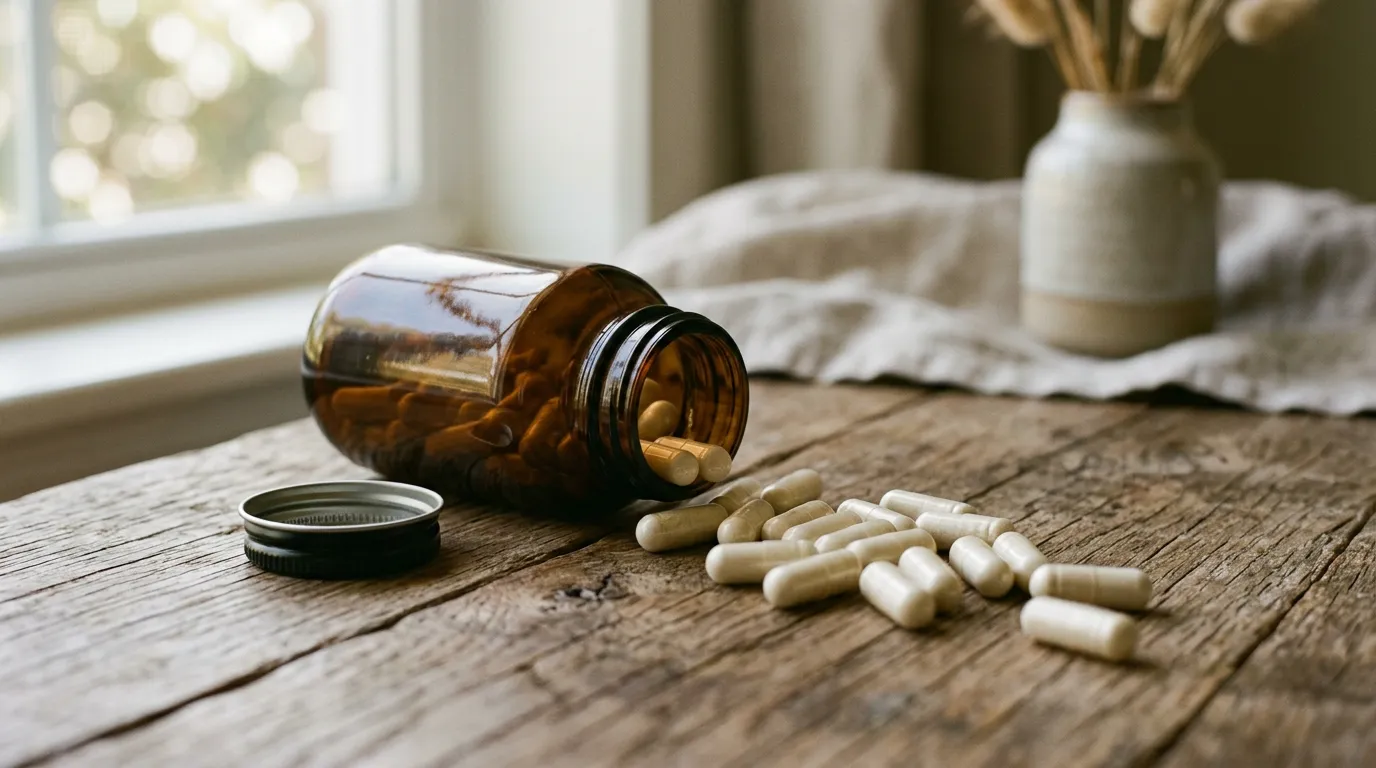
Zinc can meaningfully help inflammatory acne, but only in a specific dose range and only under specific conditions — it isn't a supplement you take blindly and hope for the best. The oral doses that have actually been studied for acne sit around 30 to 45mg of elemental zinc per day, taken for 8 to 12 weeks, and that is a problem in itself: those are trial doses, above the safe upper limit France's food safety agency (ANSES) sets for an adult, which is 25mg a day from all sources combined, and above the 22mg a day it sets for a 15 to 17 year old. A supplement sold in France can't legally exceed 15mg of zinc per recommended daily dose, so the trial range isn't something you can buy over the counter here anyway. Stay at or under the 25mg ceiling and treat anything above it as a medical decision rather than a self-service one. Push past that ceiling for months at a time and you trade one problem (breakouts) for a slower, quieter one (copper depletion). The honest starting point isn't "how much should I take" — it's "am I actually low on zinc in the first place," because the evidence for zinc helping is strongest when it's correcting a real shortfall, not stacking on top of an already-adequate diet. Everything below breaks that down step by step: the mechanism behind why zinc affects skin at all, what a normal diet already gives you, the exact ranges used in trials, where the safety ceiling sits, and how to tell whether you're actually a candidate for supplementing in the first place.
How zinc actually calms acne-prone skin
Zinc's role in acne isn't a single mechanism, it's three working together, with different levels of evidence behind each. The best-supported one is anti-inflammatory: zinc reduces the activity of neutrophils and inflammatory cytokines, the same cells and signaling molecules that turn a clogged pore into a red, swollen lesion. The second is antibacterial — zinc has direct inhibitory effects on Cutibacterium acnes, the skin bacterium implicated in inflammatory breakouts, at concentrations achievable through supplementation. The third is weaker and more debated: some research suggests zinc has a mild inhibitory effect on 5-alpha-reductase, the enzyme that converts testosterone into the more potent DHT, which in turn drives sebum production. That last mechanism is plausible and gets cited often, but it's nowhere near as well established as the anti-inflammatory and antibacterial effects, so treat "zinc directly cuts oil production" as a hypothesis, not a settled fact. Zinc also plays a documented, separate role in wound healing and skin barrier repair, which is part of why a deficiency tends to show up as skin that heals slowly and scars more visibly, not just as more breakouts.
Food sources vs. supplements: where most people actually stand
Before reaching for a bottle, it's worth knowing where a normal diet already puts you. The RDA for zinc is 11mg a day for adult men and 8mg for adult women — well below the 30-45mg range used in acne trials, which is exactly why supplementation, not food alone, is what gets studied for a therapeutic effect. Meeting the RDA is about preventing outright deficiency, not about producing a therapeutic, acne-fighting dose; the two goals use completely different numbers, and mixing them up is the single most common source of confusion in this whole topic. Still, food sources vary enormously, and some people are closer to the therapeutic range than they'd expect just from meals:
- Oysters and shellfish: by far the most concentrated source — a handful of oysters can supply more zinc than several days of RDA in one sitting.
- Red meat and poultry: a reliable, well-absorbed source, and the main reason omnivores rarely run low without another risk factor in play.
- Pumpkin seeds and cashews: the best plant sources, useful as a daily add-on but not enough on their own to reach clinical acne-trial doses.
- Legumes, whole grains, and nuts: contain meaningful zinc, but also phytates, compounds that bind zinc in the gut and meaningfully reduce how much your body actually absorbs.
- Dairy and fortified cereals: a smaller but steady contribution, useful mainly as a floor rather than a main source.
The doses actually studied for acne
The clinical literature on zinc and acne — most notably a widely cited 2018 review in Dermatologic Therapy by Cervantes and colleagues — consistently lands in the same range: oral doses of roughly 30 to 45mg of elemental zinc per day, sustained for 8 to 12 weeks, show a real reduction in inflammatory lesion counts in a majority of the randomized trials reviewed. That's elemental zinc, not the total weight of whatever compound you're taking — a common source of confusion. Zinc gluconate, one of the most common oral forms, is only about a seventh zinc by weight, so a 50mg zinc gluconate capsule delivers roughly 7mg of actual elemental zinc, not 50. Always check the supplement facts panel for the elemental zinc line, not the compound name on the front of the bottle. And keep the two numbers apart in your head: 30 to 45mg is what researchers gave patients under supervision, not what you should take. It sits above the 25mg daily ceiling ANSES considers safe for an adult, and well above the 15mg per daily dose a supplement sold in France is allowed to contain.
In the head-to-head trial usually cited here, 332 patients were randomized to either oral zinc gluconate (30mg of elemental zinc a day) or the antibiotic minocycline (100mg a day) for three months. There was no placebo arm, so the trial says nothing about how zinc compares with taking nothing at all. The clinical success rate was 31.2% for zinc against 63.4% for minocycline: zinc was clearly the weaker of the two. It gets framed as a supporting option because of its cleaner side-effect profile, not because it matched the antibiotic. (Dréno et al., Dermatology, 2001.)
Oral zinc and topical zinc aren't interchangeable
It's easy to assume any "zinc" product does the same job, but the delivery method changes what you're actually testing. Oral zinc, the kind covered above, is what the acne dosing research is built around, because it's the only route that reliably raises zinc levels systemically. Topical zinc shows up in two very different forms: zinc oxide, mostly used in sunscreens and diaper-rash creams for its physical barrier and mild soothing properties, and zinc acetate or zinc pyrithione, which appear in some prescription and over-the-counter acne lotions, sometimes paired with erythromycin in combination products. The topical route has real supporting research for mild-to-moderate acne, but the evidence base is thinner and more product-specific than the oral dosing studies, and a topical product can't correct a systemic zinc deficiency the way food or an oral supplement can. If your working theory is "I might actually be low on zinc," a topical cream doesn't test that theory — only diet or oral supplementation does.
What happens if you overdo it
The gap between "effective dose" and "upper safety limit" for zinc is narrower than for almost any other mineral people casually supplement. France's food safety agency (ANSES) sets the safe upper limit at 25mg of elemental zinc per day for an adult and 22mg for a 15 to 17 year old, food and supplements combined, which means the 30 to 45mg used in acne trials sits above that ceiling rather than near it. That's also why French law caps a supplement at 15mg of zinc per recommended daily dose: nobody is expected to self-administer a trial dose, and the trials themselves cap out around 8 to 12 weeks rather than running indefinitely. Short-term excess shows up as nausea, a metallic taste, and stomach cramping — unpleasant, but reversible within days of stopping. The slower, more serious risk is mineral competition: zinc, copper, iron, and manganese share the same intestinal transport pathways, and pushing zinc intake high for months at a time can crowd out copper absorption specifically, eventually causing a copper deficiency that mostly matters for supplementation, not ordinary meals. That's the practical argument for treating 8-12 weeks as a hard ceiling on any self-directed zinc course, not a suggestion: reassess at that point rather than continuing indefinitely just because it seems to be working.
Zinc, copper, iron, and manganese share common intestinal transport pathways and compete when heavily supplemented together — high-dose zinc can induce a copper deficiency over the long term. The effect is mainly a supplementation risk, not something ordinary food intake causes.
Your Appearance Score
What's Your Appearance Score?
60 seconds. Get a score based on your habits.
Are you actually deficient? Here's how to tell
This is the question that should come before any dosage decision, because the evidence for zinc helping acne is strongest in people who are genuinely short on it, not in people already getting enough. A few groups run a real risk: vegans and vegetarians, because plant-based zinc sources come bundled with phytates that block absorption; heavy sweaters and endurance athletes, who lose meaningful zinc through sweat; people with GI conditions like Crohn's or celiac disease that impair absorption; regular alcohol drinkers, since alcohol increases zinc loss through urine; and anyone with a heavily processed, low-variety diet. Bloodwork can check serum zinc, but the test has real limitations — levels shift with the time of day, recent meals, and inflammation itself can temporarily suppress readings, so a single low result isn't automatically proof of a true deficiency. If you fall into one of these risk groups and recognize two or more of the signs below, that combination is a far more reliable signal than any single symptom on its own.
- Persistent inflammatory acne that hasn't responded to a reasonable skincare routine and 6-8 weeks of dietary changes.
- Slow wound or blemish healing — cuts and breakouts that take noticeably longer than they used to.
- Thinning eyebrows or eyelashes, since progressive loss in this area can reflect a systemic issue, including iron, zinc, or biotin deficiency, and not just local causes like plucking or rubbing.
- A reduced or altered sense of taste, one of the more specific signs of low zinc status.
- A largely plant-based diet with no attention paid to phytate-heavy meals or zinc-rich add-ins.
A 2025 review identifies zinc as one of seven nutrients commonly deficient on a vegan diet, alongside B12, iron, calcium, vitamin D, iodine, and omega-3 — deficiencies that are preventable with deliberate dietary planning and, where needed, targeted supplementation rather than a blanket multivitamin.
Should you supplement, or fix your diet first?
Food first, supplement second, and only if you have a real reason to think you're actually low. That ordering isn't just caution for its own sake — it shows up directly in zinc research on other outcomes, too: in men with a genuine hormonal deficiency, adding zinc to standard treatment provided almost no additional benefit once the underlying deficiency was already being corrected. Zinc doesn't stack on top of an adequate baseline and produce extra results; it fixes a shortfall and then stops mattering. Applied to acne, that means the highest-value move for most people isn't jumping straight to a high-dose supplement (and in France nothing above 15mg a day is legally on the shelf) — it's improving zinc-rich food intake for a few weeks, watching for the deficiency signs above, and reserving supplementation (ideally checked with a doctor or dermatologist, especially if you're also on other acne treatments like isotretinoin or antibiotics) for when there's an actual gap to close. A doctor's input matters even more in a few specific cases: pregnancy and breastfeeding change safe zinc ranges, and isotretinoin already affects mineral and vitamin metabolism, so stacking a high-dose supplement on top without checking in first isn't a small decision.
How long before you'd actually see a difference
Whether you're adjusting food intake or adding a supplement under guidance, the timeline is the same one that applies to almost every diet-and-skin change: 8 to 12 weeks before you can honestly judge whether it worked, which lines up with both the acne trial durations above and a full skin cell turnover cycle. Track it the way you'd track a training program, not a mood — photos in the same light and angle, once a week, not daily, because day-to-day skin variation is too noisy to show a real trend. Change one variable at a time and keep everything else in your routine (sleep, skincare, stress) stable, so that if your skin does improve, you actually know why. If you started supplementing because bloodwork or symptoms suggested a real deficiency, that's also the point to reassess — either with a follow-up test or simply by noting whether the non-skin signs (energy, healing speed, taste) improved alongside your skin.
This is precisely the kind of pattern that's hard to track by memory and easy to miss without a system — whether your meals are actually giving you enough zinc, or whether a supplement window is doing anything at all. HALOIA's meal scoring and skin score are built to surface exactly that: log what you're really eating, and it flags the nutritional gaps that are plausibly connected to your skin, instead of leaving you to guess at a dose from a blog post. If you want a faster starting point than trial and error, HALOIA's free appearance quiz gives you a baseline read on your skin, diet, and habits before you change anything.
Sources
This article is for information only and is not a substitute for medical advice. For any question about your health, a treatment or a supplement, consult a qualified professional.
Improve your appearance by eating better
Build real confidence by tracking your diet. Download HALOIA and start your tracking.

Go further

The Best Breakfast for Clear Skin in Your 20s
Forget "eat clean" advice with no specifics. Here's the exact breakfast structure that keeps blood sugar stable and gives your skin what it needs to repair overnight's damage.
Ashwagandha: Its Real Effect on Stress and Training
Ashwagandha gets credited for almost everything. Two claims actually hold up in controlled trials — stress/cortisol and strength/muscle — and they don't have the same evidence behind them. Here's the honest breakdown.

Who Should Never Fast?
Intermittent fasting is safe for most healthy adults — but not for everyone. Here's exactly who should skip it, and why, according to the research.