

The Best Calorie Tracking Apps in 2026, Compared
Five calorie tracking apps, compared on what they actually do differently, not just marketing claims. Prices and trial terms as of September 2026.
 Damien, founder of HALOIA9 min read
"Best calorie tracking app" depends entirely on what you're optimizing for, and most roundups dodge that by ranking whichever app paid for the placement. This one doesn't take payment from any app listed, including HALOIA, which we build. Five apps, what each one actually does differently, real pricing as of September 2026, and where each one is a genuinely better fit than the others, including where that isn't HALOIA.
MyFitnessPal: the biggest food database, priced like it
MyFitnessPal's real advantage is scale: it advertises 20.5M+ foods, the largest crowd-sourced database of any app on this list, which matters most if you eat a lot of restaurant meals, packaged snacks, or regional dishes that smaller databases miss. It has also caught up on convenience since acquiring Cal AI, adding meal scan and voice logging alongside the barcode scanner and an AI coach that reads your logging history.
Premium runs $19.99/month or $79.99/year (about $6.67/month); Premium+ adds meal planning and 1500+ recipes at $24.99/month or $99.99/year. It's the generalist choice, and the most expensive one here: strong if database coverage is your main concern, harder to justify if what you actually want is micronutrient detail, which Cronometer gives you for less.
Cal AI: the fastest way to log a photo, with a caveat on cancellations
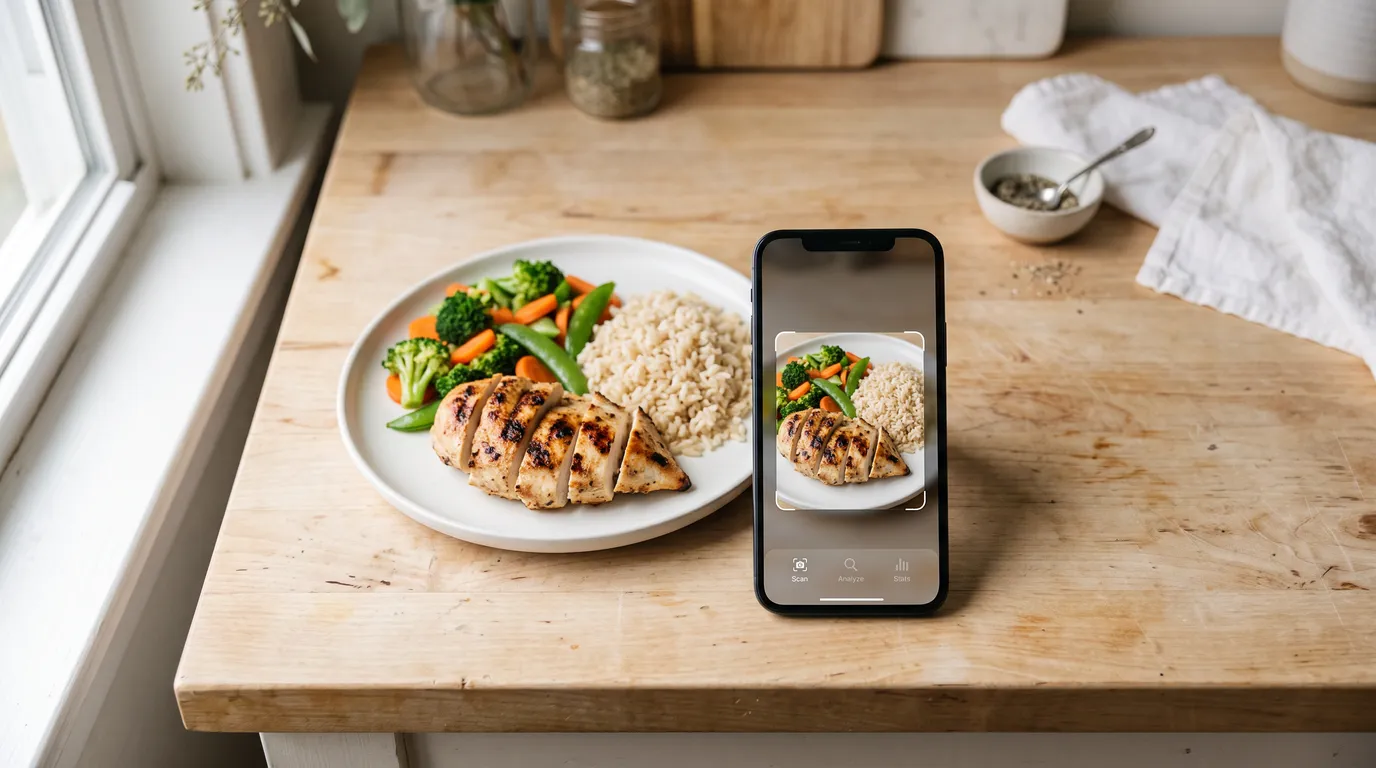
Cal AI made AI photo scanning the default expectation for this category, and it's genuinely fast: point, shoot, get a calorie estimate in seconds. MyFitnessPal acquired it in December 2025, announced the following March, and the two still run as separate apps. Cal AI has since been wired into MyFitnessPal's food database. It's also the cheapest option here, commonly around $9.99/month or $29.99/year (about $2.49/month).
One caveat worth knowing before you commit: its recent low-rated App Store reviews, which we read for this piece, include several accounts of charges continuing after users believed they had cancelled. Worth it if speed and price are what you're optimizing for and you're comfortable double-checking your subscription status occasionally; worth skipping if a charge you didn't expect is a dealbreaker or you want more than a calorie number.
Lifesum: intermittent fasting and a lifestyle framing
Lifesum treats intermittent fasting as a core feature rather than an add-on, and logs food through photo, voice, text, or barcode. It's positioned less as "count everything" and more as "eat well without a rigid diet," with a large recipe library. Its App Store listing shows $7.49 for a month, $14.99 for three, and $49.99 for a year, though tiers move around by region and promotion more than most apps here. A good fit if fasting structure matters more to you than granular macro tracking.
What Shapes How Your Face Looks?
The appearance quiz: eight questions to check in on your habits.
Take the appearance quizCronometer: the most generous free tier, built for precision
Cronometer's real differentiator is depth: its free tier tracks up to 84 nutrients and compounds, and Gold raises that to 95. That's the most granular micronutrient breakdown on this list, and the reason it's the app of choice for people tracking a specific deficiency or following a precise plan. That free tier is genuinely usable on its own rather than a crippled demo, which is the other thing it's known for.
Gold runs $10.99/month or $59.99/year (about $4.99/month) and adds Photo Log, Voice Log, a Crono Coach AI assistant, a fasting timer, custom charts, and the recipe importer, so if you had it filed as "the one without AI scanning," that hasn't been true for a while. Pick it if nutrient detail is what you're after, or if you want a free plan that still does real work.
HALOIA: three scores estimated from your meals
Full disclosure again: this is the app we build, so judge this section accordingly. HALOIA scans meals the same way Cal AI does (photo or barcode), using CIQUAL and USDA data for foods and Open Food Facts for packaged products. Every app on this list tracks something beyond calories, and several now ship an AI coach, so that isn't the differentiator.
What none of the other four offer is this: HALOIA turns your logged meals into a face score, a muscle score, and a health score, all estimated from what you eat (nothing is measured on your face) and moving over time, with a coach that reads your history rather than one meal at a time. That's the honest reason to consider it: if food-only tracking has never told you whether anything is actually changing.
On price in the US: $9.99/month, or $39.99/year (about $3.33/month). Annually that's the second cheapest on this list, behind Cal AI's roughly $29.99/year and below Lifesum, Cronometer's $59.99, and MyFitnessPal's $79.99. There is no free trial: the price appears on the subscription screen at the end of setup, before any charge. Price isn't the reason to skip it. Database size is, if you want MyFitnessPal's 20.5M+ crowd-sourced entries including obscure restaurant dishes, or micronutrient depth is, if you want Cronometer's 84-nutrient breakdown. Those are genuinely fine reasons to pick one of them instead.
Which one should you actually pick?
- Want the biggest food database and don't mind paying for it: MyFitnessPal.
- Want the cheapest, fastest photo scan and don't mind double-checking your billing: Cal AI.
- Fasting is your main structure, not just calorie counting: Lifesum.
- Want a genuinely usable free tier and care about micronutrients: Cronometer.
- Want face, muscle, and health scores built from your meals, not just a calorie total: HALOIA.
Sources
This article is for information only and is not a substitute for medical advice. For any question about your health, a treatment or a supplement, consult a qualified professional.
Start Analyzing Your Meals Today.

Go further
Cal AI Alternative: An Honest Comparison
Cal AI made AI photo scanning the default way to log a meal. Its recent low-rated reviews also include reports of charges after cancellation, and what it tracks stops at intake. An honest comparison follows.

The Real Rest Time Between Sets to Make Progress
Most rest timers are set for the wrong goal. The research on how long to rest between sets for strength and muscle, and when short rest is the right call instead.

The 4 Real Causes of Facial Water Retention
Puffy face again? There are only four real culprits, and they leave different clues. Below is how to tell them apart instead of guessing.