
Cal AI Alternative: An Honest Comparison
Cal AI made AI photo scanning the default way to log a meal. Its recent low-rated reviews also include reports of charges after cancellation, and what it tracks stops at intake. An honest comparison follows.
 Damien, founder of HALOIA8 min read
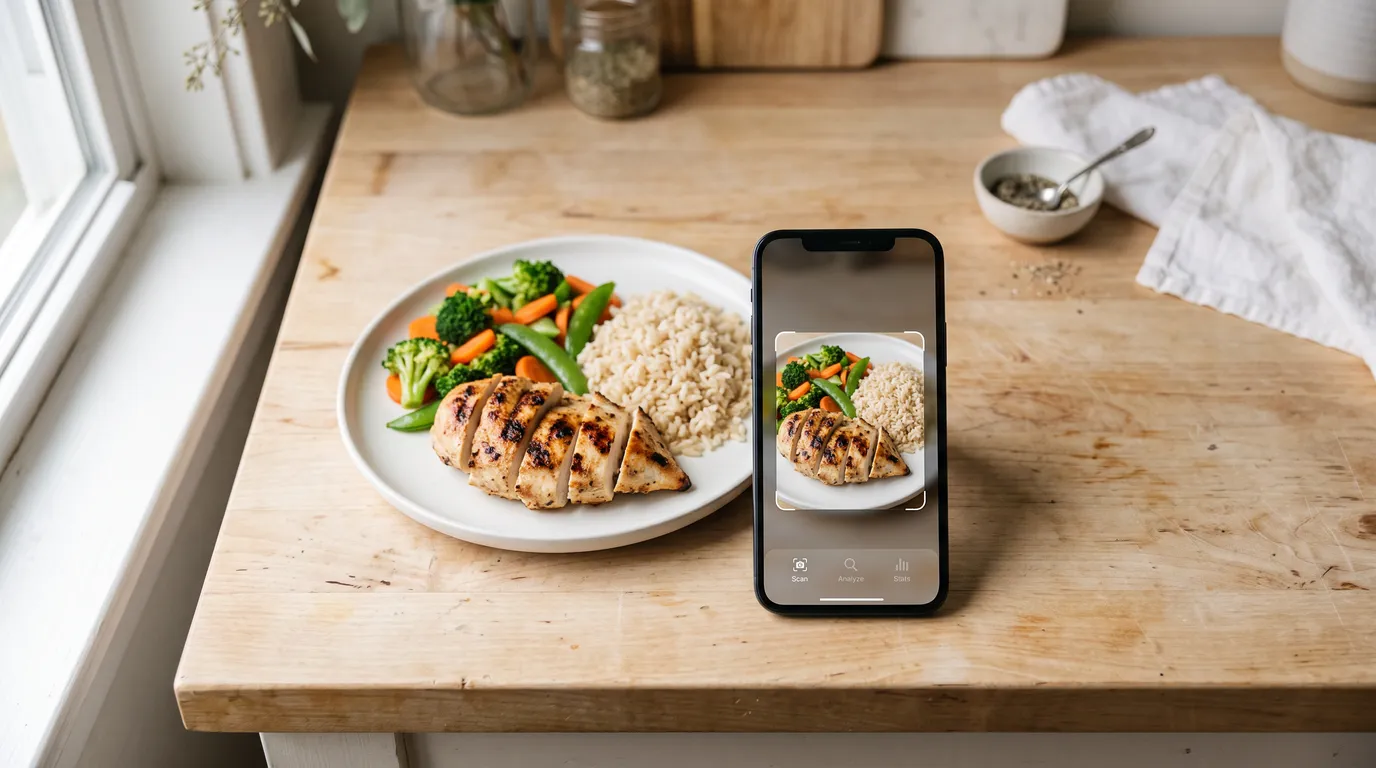
Cal AI is the app that made "just take a photo of your plate" the default way people think about calorie tracking, and it deserves credit for that: point a camera at a meal and get a calorie and macro estimate back in seconds, no searching a food database, no typing ingredients one by one. That single idea is why it grew fast enough to get acquired by MyFitnessPal, in a deal that closed in December 2025 and was announced the following March; the two still ship as separate apps.
If you're reading this, you're probably not questioning whether photo scanning is a good idea. You already like it. You're looking for an alternative because something specific about the experience is bothering you. Here's an honest look at what that's usually about, and what actually differs between Cal AI and HALOIA, without pretending the cheaper app is the worse one across the board. If you are still choosing, five calorie tracking apps are compared side by side.
What Cal AI genuinely does well
Speed is the real product. The onboarding quiz, the camera-first home screen, the instant estimate: everything is built around getting from "I ate something" to "logged" in the fewest taps possible. For someone who only wants a calorie number and doesn't care about anything else the app measures, that's a genuinely well-executed, and genuinely cheaper, product: Cal AI's most common paid tier lands around $9.99/month, with an annual plan close to $29.99/year (about $2.49/month).
Month to month that's the same as HALOIA; on the annual plan it's about $10 a year less. If price and pure speed are what matter to you, this comparison isn't going to talk you out of Cal AI, and it shouldn't.
What the recent reviews report
We pulled Cal AI's most recent public App Store reviews (US storefront, 1-2 star filter) rather than guessing at complaints, and a couple of themes come up repeatedly.
- Charges after cancellation: several reviews describe being charged again after the reviewer believed they had cancelled, including one describing a charge appearing about a year after the app had already been deleted.
- Intake only: several reviews describe an app that stops at a calorie and macro count, with no sign of whether anything is changing.
None of this means Cal AI is broken for everyone. Plenty of its reviews are neutral to positive, and a fast-growing app with millions of downloads will always accumulate a long tail of billing disputes. But the cancellation reports are consistent enough, across independently written reviews, to be worth knowing about before you subscribe to any app. Whether a general-purpose chatbot could do the same job is a separate question, covered in ChatGPT versus a real nutrition app.
What Shapes How Your Face Looks?
The appearance quiz: eight questions to check in on your habits.
Take the appearance quizThe structural difference: calories only vs. calories, face, muscle, and health
This part isn't about bugs or billing. It's what the two apps are actually built to measure. Cal AI is built to produce a calorie and macro count; it takes in exercise data alongside that, but what it hands you at the end of the day is intake against a target.
HALOIA scans the same way (photo or barcode) but scores three separate things over time: a face score, a muscle score, and a health score, each estimated from your logged meals and trending over time rather than existing as a one-off calorie total. If what frustrates you about calorie-counting apps is that hitting your number every day doesn't obviously translate into looking or feeling any different, that's the gap HALOIA is built around: you're not just logging food, you see the face, muscle and health scores of your meals and how they trend over time.
How HALOIA billing works
Since cancellation complaints show up in Cal AI's reviews, here is how HALOIA's billing works rather than a claim that it's better. There's no trial period: you pick a weekly ($1.99), monthly ($9.99) or annual ($39.99) plan, the price is shown on the subscription screen at the end of setup before you confirm, and the first period is charged when you subscribe. Each plan renews automatically, and you cancel in your Apple account settings at least 24 hours before the current period ends.
The honest trade-off
HALOIA costs a bit more on the annual plan: $39.99/year in the US (about $3.33/month) against Cal AI's roughly $29.99, with both sitting at $9.99 if you pay monthly. It's a real difference and there's no honest way to write around it, even if it's smaller than the gap between these two apps' feature lists.
What that difference buys is a food database built on CIQUAL and USDA data for foods and Open Food Facts for packaged products, a recipe library, an AI coach that looks across your logged meals rather than one scan at a time, and face, muscle, and health scores that Cal AI doesn't offer. It's not a claim that the calorie estimate itself is more accurate, since we haven't run a controlled side-by-side test of that specifically.
If you just want the cheapest, fastest way to see a calorie number after a meal and nothing else matters, Cal AI is a reasonable choice and this article isn't trying to talk you out of it. If the cancellation reports above are why you're looking around, HALOIA is billed the same way, through Apple, so the difference isn't there. If calories alone have never actually told you whether you're making progress, that's the gap HALOIA is built to close.
Sources
This article is for information only and is not a substitute for medical advice. For any question about your health, a treatment or a supplement, consult a qualified professional.
Start Analyzing Your Meals Today.

Go further

The Best Calorie Tracking Apps in 2026, Compared
Five calorie tracking apps, compared on what they actually do differently, not just marketing claims. Prices and trial terms as of September 2026.

The Real Rest Time Between Sets to Make Progress
Most rest timers are set for the wrong goal. The research on how long to rest between sets for strength and muscle, and when short rest is the right call instead.

The 4 Real Causes of Facial Water Retention
Puffy face again? There are only four real culprits, and they leave different clues. Below is how to tell them apart instead of guessing.