
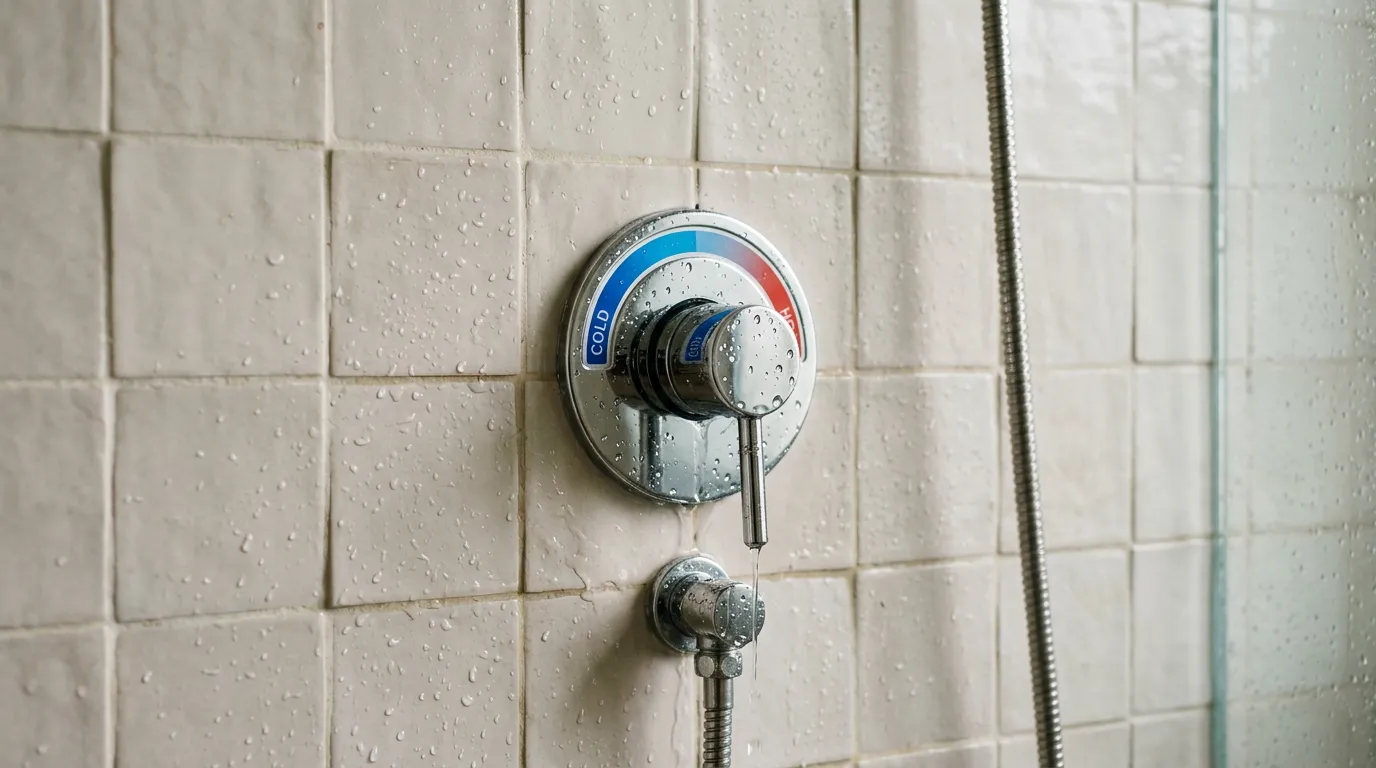
Cold Showers: 29% Fewer Sick Days in a Trial
A randomized trial with over 3,000 people found cold showers cut sick-leave days by 29%. Here's exactly what was tested, why it might work, and where the data get more complicated than the headline.
 Damien, founder of HALOIA11 min read
A randomized controlled trial with over 3,000 participants found that people who took cold showers for 30 days had 29% fewer sick-leave days than a control group who showered normally. That's a real, peer-reviewed result, not an influencer claim recycled from a podcast. But the headline number hides something important: the trial measured how many days people called in sick, not how often they actually got sick. Those turned out to be two different things, and the gap between them is where most cold-shower content quietly stops explaining. This isn't the cold-shower-and-stress story you may already know — this one is specifically about immune function and time off work, built on a different mechanism and a different dataset. Here's exactly what the study did, what it found, what it didn't find, the mechanism that might explain it, and where a cold shower actually fits into an immune-health routine rather than replacing one.
What the study actually found
The trial, led by Buijze and colleagues and published in PLOS ONE in 2016, tracked self-reported sickness absence from work over a 90-day window. Using a negative binomial regression model, the statistical approach built for comparing counts of days between groups, the cold-shower group showed a 29% reduction in sickness absence compared to control: an incidence rate ratio of 0.71, with a p-value of 0.003. In plain terms, if you'd expect 100 sick days across a group showering normally, the cold-shower group logged about 71 instead, and this size of difference is very unlikely to be a fluke of random sampling. It's worth being precise about what this is not: it's a different finding from the cold-shower-and-mood research you may have come across elsewhere, which looks at stress and anxiety through a nervous-system lens over weeks of practice. This trial is specifically about the immune system and time away from work, running on its own dataset and its own outcome measure. Treat the two as separate questions rather than assuming one result implies the other.
Who was in the trial, and how it was run
Between January and March 2015, researchers recruited 3,018 adults aged 18 to 65 in the Netherlands, screened to exclude anyone with a severe underlying health condition or an existing cold-showering habit that would have made them a poor comparison point. Participants were randomly assigned, in roughly equal numbers, into three cold-shower groups or a control group, which is what makes this a controlled trial rather than a survey of people who already liked cold showers and might differ from average in other ways (more disciplined, more health-conscious, and so on). The protocol itself was simple enough to actually follow in real life: shower as usual, then finish with cold water for a fixed duration depending on your assigned group. Outcomes were tracked through online questionnaires covering sickness absence, self-reported illness days, quality of life, work productivity, anxiety, and any adverse reactions to the cold. Seventy-nine percent of participants completed the mandatory first phase of the protocol, which is a solid adherence rate for a daily habit most people don't particularly enjoy, and a reasonable sign that the 29% figure isn't resting on a handful of especially motivated volunteers.
The exact protocol tested
- Shower as you normally would first, with warm or hot water, for as long as you like.
- At the end, switch the water to cold for a fixed duration: 30, 60, or 90 seconds, depending on which group you'd been randomly assigned to.
- Do this every day for 30 consecutive days without skipping — this was the mandatory, tracked phase of the trial.
- After day 30, continue cold showering at your own discretion for another 60 days, with no fixed duration required, just whatever each participant chose to keep doing.
- No specific temperature target was set beyond "cold" tap water, and the control group showered exactly as they normally would, with no cold phase added at all.
Why 30 seconds seems to be enough
This is the detail worth knowing before you set a timer for longer than you need to. Each of the three duration groups, 30, 60, and 90 seconds, showed a statistically significant reduction in sickness absence compared to control on its own (p-values of 0.014, 0.0268, and 0.0065 respectively). But when the researchers compared the three cold-shower groups against each other, there was no meaningful difference between them. More cold exposure didn't produce a proportionally bigger benefit — the 90-second group didn't outperform the 30-second group in any measurable way.
If the goal is specifically the sick-day effect measured in this trial, 30 seconds of cold water appears to do the same job as 90. Anything longer than that is a personal preference or a separate goal (cold tolerance, mood, whatever else you're after), not a documented requirement for this particular outcome.
In practice, this also makes the habit easier to actually sustain, which matters more than it sounds. Trial participants weren't asked to start with a full cold shower on day one; they finished a normal warm shower with a short cold phase tacked onto the end, which is a far smaller ask than stepping straight into cold water from a standing start. If you're trying this yourself, the same logic applies: keep the warm portion of your shower as it already is, then count out 30 seconds of cold water at the end before you get out. There's no evidence from this trial that a colder tap or a longer stretch buys you anything extra on the sick-day outcome specifically, so there's little reason to push past what you can realistically keep doing every day for a month.
Your Appearance Score
What's Your Appearance Score?
60 seconds. Get a score based on your habits.
The immune mechanism, and why it's still a hypothesis
The trial itself didn't draw blood or track immune markers directly — it measured self-reported days off work, nothing at the cellular level. The proposed biological explanation comes from a separate body of research: regular cold exposure is associated with a measurable rise in certain immune markers, including immunoglobulins and specific interleukins involved in the body's defense response, alongside a spike in norepinephrine that happens with each cold exposure as part of the body's general stress response. The working theory is that repeated, brief cold stress trains the immune system somewhat the way brief training stress trains a muscle: a mild, controlled challenge the body adapts to over time, rather than a direct antiviral effect. That's a genuinely plausible mechanism, and it's consistent with how the body responds to other forms of controlled physical stress. But it hasn't been directly measured, session by session, inside the Buijze sick-day trial itself — the immune-marker research and the sick-day trial are two different bodies of evidence that point in a compatible direction, not one single study proving cause and effect end to end. Treat the mechanism as the most likely explanation on the table, not as a settled fact. If you've come across the same cold-exposure research applied to stress and mood, that's a genuinely separate pathway (largely nervous-system and hormonal, tied to how norepinephrine affects perceived stress over repeated sessions) rather than the immune one described here — the two lines of research happen to share a stimulus, not a mechanism.
What the trial didn't prove
This is the part most cold-shower content skips entirely, and it's the part that actually matters if you're deciding whether to bother. When the researchers looked at the raw number of illness days people reported, meaning days they said they actually felt sick, there was no significant difference between the cold-shower groups and control. In other words, the cold-shower group didn't get sick less often. They took fewer days off when they did. The study's own authors raise a psychological explanation alongside the physiological one: something closer to grit or a "hardening" effect, where people who'd committed to a daily cold-water habit for 30 days were simply more likely to push through a mild cold and show up to work anyway, independent of whether their bodies were actually fighting off more infections. Every outcome in this trial was also self-reported through questionnaires rather than verified by an employer or a doctor, which opens the door to ordinary reporting bias — people who've just completed a demanding daily challenge may genuinely feel, and report, that they're tougher, whether or not their infection rate actually changed. And this is a single trial, in one country, over one 90-day window; a striking result, but not yet the kind of finding that's been independently replicated at this scale elsewhere. It's also worth noting the participants opted into a study framed around cold showering from the start, which is a different population than a random cross-section of adults who've never thought about it — how much that shapes the result is genuinely unknown, not something the trial design can rule out. Put together, the honest version of the headline is narrower than it sounds: fewer sick days claimed, not clearly fewer illnesses experienced.
One safety note worth taking seriously
Sudden cold exposure, whether it's an ice-cold shower or a full cold plunge, carries a real risk for anyone with a cardiovascular condition such as arrhythmia or hypertension. The cold shock response briefly spikes heart rate and blood pressure as the body reacts to the sudden temperature change, which is a manageable stressor for most healthy adults but not a risk worth taking without medical advice if you have an existing heart condition. This isn't a generic disclaimer added out of caution — it's a specific, documented risk in the cold-exposure research, and a legitimate reason to check with a doctor before starting rather than just easing in gradually and hoping for the best.
What cold showers don't replace
Even taking the 29% figure at face value, a 30-to-90-second daily habit isn't a substitute for the basics that actually keep an immune system functioning well in the first place: consistent sleep, a diet that covers zinc and vitamin C needs instead of quietly running short on them, proper hand hygiene, and staying current on whatever vaccines a doctor recommends. Nothing in the trial suggests cold showers outperform or replace any of that — the researchers tested it as an addition layered on top of participants' normal lives, not as a swap for anything they were already doing. That distinction matters more than it sounds: a habit that adds a marginal benefit on top of a solid foundation is genuinely useful, but the same habit layered on top of a diet that's short on the nutrients your immune system actually needs isn't going to close that gap. And that kind of gap is much easier to miss than most people assume, because it doesn't come with an obvious symptom until it's already affecting how you feel. It's also worth being honest about what a 30-day, 90-second daily commitment actually buys you emotionally: it's a small, controllable habit that can genuinely make you feel like you're doing something proactive for your health, and that feeling is worth something on its own. Just don't let it stand in for the less exciting groundwork that does most of the actual heavy lifting.
That's the exact blind spot HALOIA's meal tracking is built to catch, not by adding another habit to your list, but by showing you, from what you're already eating, whether the nutrients tied to immune function are actually where they need to be, instead of guessing and hoping a cold shower is quietly covering for a gap it was never designed to fix.
This article is for information only and is not a substitute for medical advice. For any question about your health, a treatment or a supplement, consult a qualified professional.
Improve your appearance by eating better
Build real confidence by tracking your diet. Download HALOIA and start your tracking.

Go further

Should You Hire a Photographer for LinkedIn?
A close-up selfie and a professional headshot don't just look different, they make people think different things about you. Here's what the research actually shows, and how to get most of the effect without booking a studio.
Does Building a Non-Smoker Identity Help You Quit?
Willpower treats every cigarette as its own fight to win. Identity skips the fight entirely. Here's what a year-long study of 623 smokers found, and how the same lever works on food and exercise too.
Cold Showers: The Real Effect on Stress
Everyone's doing cold showers for the mental health benefits, but the science is pickier than the trend suggests: the calming effect is real, it just isn't the one you get from a single icy blast.